
RBL Bank's interim chief executive officer (CEO) and managing director (MD) Rajeev Ahuja on Sunday tried to allay concerns around the health of the bank. He said events during the weekend are not linked to RBL's asset quality. The bank said Vishwavir Ahuja, its managing director (MD) and chief executive officer (CEO), had on Saturday proceeded on leave with immediate effect on medical grounds.

Tokenisation is the process of replacing debit and credit card numbers with a set of characters or tokens.

For the first time in 21 years, the Reserve Bank of India (RBI) will revise norms for investment portfolios of commercial banks to reflect changes in global standards on valuation and measurement, and progress in the domestic market. This could pave the way for banks to transition to the new accounting standards (Ind-AS). The outstanding investment portfolio of commercial banks was at Rs 45.84 trillion as of November 19 this year.

The draft amalgamation scheme of Punjab and Maharashtra Co-operative (PMC) Bank with Unity Small Finance Bank (SFB) allowed quick relief to depositors with savings of up to Rs 5 lakh, but a long wait for those who had their nest egg with the scam-tainted bank. If the scheme gets approved, 96 per cent (or 880,000 of 924,000) depositors will get their full money straightaway after PMC is merged with Unity SFB. According to the draft scheme, retail investors may get up to Rs 5 lakh from the Deposit Insurance and Credit Guarantee Corporation (DICGC) instantly, and then some more in phases till they can recall their full deposits after 10 years.
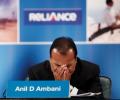
Reliance Power (RPower) has defaulted on payment of interest worth Rs 1.17 crore to DBS Bank India and Rs 44 lakh to IDBI Bank. It failed to pay up interest on October 30, 2021. The firm, part of the Anil Ambani-promoted Reliance group, in filing with BSE, said it has term loans and working capital arrangements with three lenders - YES Bank, IDBI Bank and DBS. Its stock closed 1.41 per cent lower at Rs 12.6 per share on the BSE on December 1. About exposure of YES Bank, there is a 'standstill' applicable till December 26, 2021.
Banks are set to sell dud-loans worth Rs 90,000 crore of 22 firms in the first tranche to the National Asset Reconstruction Company (NARCL). It's reason for cheer given that such sales to asset reconstruction companies (ARCs) have been poor in recent times. In fiscal 2020, their assets under management (AUM) contracted by 4 per cent; and in fiscal 2021, it fell by another 100 basis points to Rs 1.07 trillion. So, why are we where we are?

'I hope the trend is sustainable and that economic activity accelerates going forward.'

Personal loans have about 80 per cent share in exposures restructured under regulatory package 2.0 by eight banks who have declared results for the second quarter. The remaining 20 per cent are loans to individuals used for business and credit to MSMEs. The total recast exposure of these banks under One Time Restructuring (OTR 2.0) was Rs 27,708 crore.

The Insurance Regulatory Development Authority of India (Irdai), the regulator for insurance companies, is set to allow the insurers to offer wellness programmes along with life insurance policies that can earn reward points for the policyholders. These reward points can be redeemed for getting a discount during renewal. The insurance regulator has circulated draft guidelines to insurance companies for feedback before issuing the final guidelines, as is the norm.

A lot depends on how Srei shapes up under the new administrator and his team, which is critical for investors' interest.
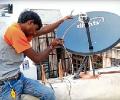
Even as the corporate battle over Zee Entertainment Enterprises (ZEEL) has reached the Bombay high court, another Essel Group firm - Dish TV India - is gearing up for a legal battle with YES Bank by planning to move the National Company Law Tribunal to appoint six of its nominees on the board of the loss-making company. While Dish TV said YES Bank has acquired 26 per cent stake by invoking the pledged shares of Essel Group promoter, it also said YES Bank must make an open offer to shareholders of the company, according to the Securities and Exchange Board of India (Sebi) takeover code. This, as YES Bank is seeking to take control of the company, said Dish TV.

Superseding the boards of two non-banking financial companies (NBFCs) in the Srei group will neither create liquidity challenges for sound entities, nor build systemic crises because the markets have factored in the problems with the Kolkata-based firms. Such regulatory steps will help in making the NBFC space more robust, bankers and market experts said. The action should have begun earlier because the Reserve Bank of India (RBI) had done a special audit last financial year and asked the group to make provisions for assets considered stressed, analysts said.

Term insurance policy premiums are set to rise by 25 to 30 per cent with Munich Re, the largest reinsurer for the Indian insurance market, increasing its rates for underwriting portfolios of pure protection plans by up to 40 per cent. According to a senior executive of a private life insurance company, the global reinsurer has communicated its decision about increasing rates. About 8-10 insurance companies have been informed about the move, sources said.

The recent Reserve Bank of India (RBI) norms on tokenisation services, which will be offered by card networks, are likely to result in merchants and payment aggregators incurring a cost as they have to pay a fee to the networks. The merchants and the payment aggregators, in turn, may pass on the cost to the customers. The norms, which were issued by the banking regulator released on September 7, allow card networks like Visa and Mastercard to offer the tokenisation service.

India's largest public sector bank State Bank of India (SBI) will support Tata group's bid for soon-to-be-privatised Air India by subscribing to Tata Sons debentures or funding the special purpose vehicle (SPV) set up by Tata Sons for the acquisition. Bankers said the credit rating of Tata group's holding company is "AAA" signifying high safety and a combination of Air India with its existing airline businesses would make it a formidable player - leading to a duopoly market with IndiGo. It would also open many business opportunities, including in the retail segment, an official said.

The Deposit Insurance and Credit Guarantee Corporation (DICGC) will pay the depositors of 21 stressed cooperative banks, including the Punjab & Maharashtra Co-Operative Bank (PMC Bank), up to Rs 5 lakh within 90 days. The Reserve Bank of India (RBI) had imposed restrictions on the withdrawal of deposits from these banks. Of the 21 banks, 11 are from Maharashtra, five from Karnataka, and one each from Uttar Pradesh, Kerala, Rajasthan, Madhya Pradesh, and Punjab.
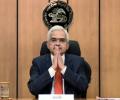
'Even if there is a third wave or a fourth wave, it is hard to see the economy will suffer like that (during the first wave).'
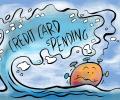
'Spends are likely to increase from the current levels because recovery is yet to fully be over.'
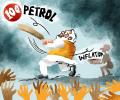
'People know if inflation is not within the tolerance band, then action will be taken so they do not expect inflation to rise above that.'

The talk of governance reforms at public-sector banks seems to remain on paper, as a majority of them continue to be working with just a handful board members. Half of the board seat at these banks have been vacant. Ten of the 12 public-sector banks, even large ones like Punjab National Bank, Canara Bank and Union Bank of India - all except State Bank of India (SBI) and Bank of Baroda - don't even have a chairman. In 2014, while splitting the post of chairman & managing director (CMD), the government had decided to appoint non-executive chairmen at these banks. SBI, which has an executive chairman and four managing directors, was an exception.
 © 2026 Rediff.com - Advertise with us - Disclaimer - Privacy Policy - Sitemap - Feedback - About us - Terms of use - Grievances